Living in a small studio doesn’t mean living small. With the right strategies, even a 350-square-foot space can feel airy, organized, and genuinely comfortable. The secret isn’t cramming in multi-functional furniture — it’s making deliberate choices about scale, storage, and visual flow. Here are the hacks that actually make a difference.
Choose Furniture That Breathes
The biggest mistake small-space dwellers make is choosing furniture that’s too bulky. A low-profile sofa on legs, rather than a chunky sectional that sits flush with the floor, instantly makes a room feel larger because you can see underneath it. The same logic applies to beds, dressers, and coffee tables — anything that visually floats makes the floor space read as continuous.
Vertical Storage Is Your Best Friend
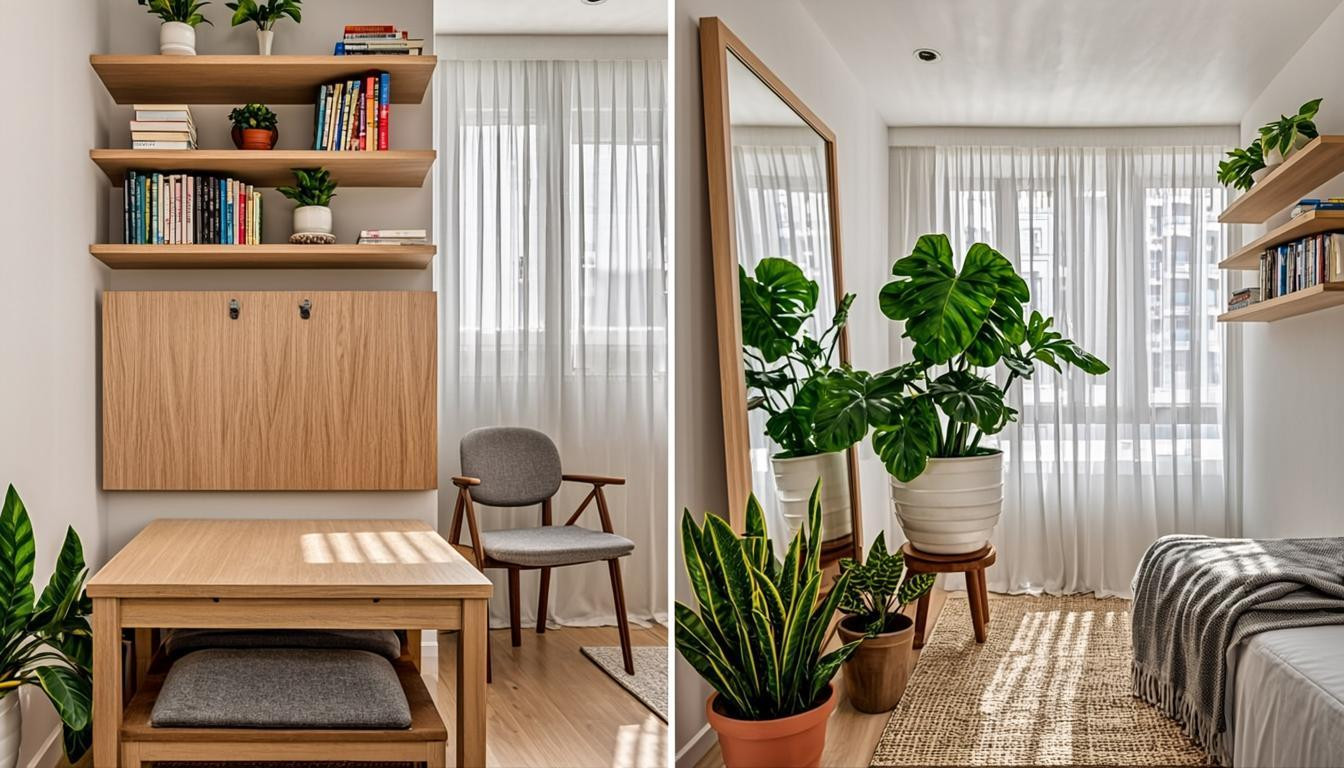
When floor space is limited, walls become storage. Floor-to-ceiling shelving draws the eye upward and makes ceilings feel higher, while housing an enormous amount of stuff. Wall-mounted nightstands and floating desks eliminate floor furniture entirely in tight spots. Even floating TV consoles free up valuable floor area and create a sense of spaciousness that traditional media centers can’t match.
Mirrors and Light: The Oldest Tricks
A large mirror opposite a window effectively doubles the natural light in a room and creates the illusion of depth. It’s a cliché for a reason — it works. Pair mirrors with light, reflective surfaces on walls and floors to bounce what little light you have around the space. Avoid dark accent walls in studios; they make rooms feel like caves. Stick to whites, creams, and pale neutrals.
Define Zones Without Walls
Open-plan studios need zones — sleeping, living, working — but you don’t need walls to create them. A large rug anchors a living area. A console table behind a sofa separates it from a workspace. Floor lamps and pendant lights create pools of light that visually carve up a room. The goal is to make each zone feel like its own space without closing anything off.
Fold-Down and Multi-Use Pieces
A wall-mounted fold-down desk gives you a workspace when you need it and disappears when you don’t. A drop-leaf dining table expands for guests and shrinks to console size for daily use. Murphy beds have come a long way from the clunky models of the past — modern versions often include integrated shelving and sofas that fold away with the bed. Each multi-functional piece should earn its keep by genuinely solving a problem in your space.
Don’t Forget the Doorways
Door-mounted organizers, over-the-door hooks, and the back of closet doors are underused real estate. A shoe rack on the back of a bedroom door frees up floor space; hooks on the bathroom door replace bulky towel racks. Small adjustments add up. The cumulative effect of these micro-decisions is a studio that feels twice its actual size. Explore ShopBar’s Home & Living collection for furniture and storage sized for small spaces.


Discussion
0 CommentsShare your thoughts — every perspective adds value.