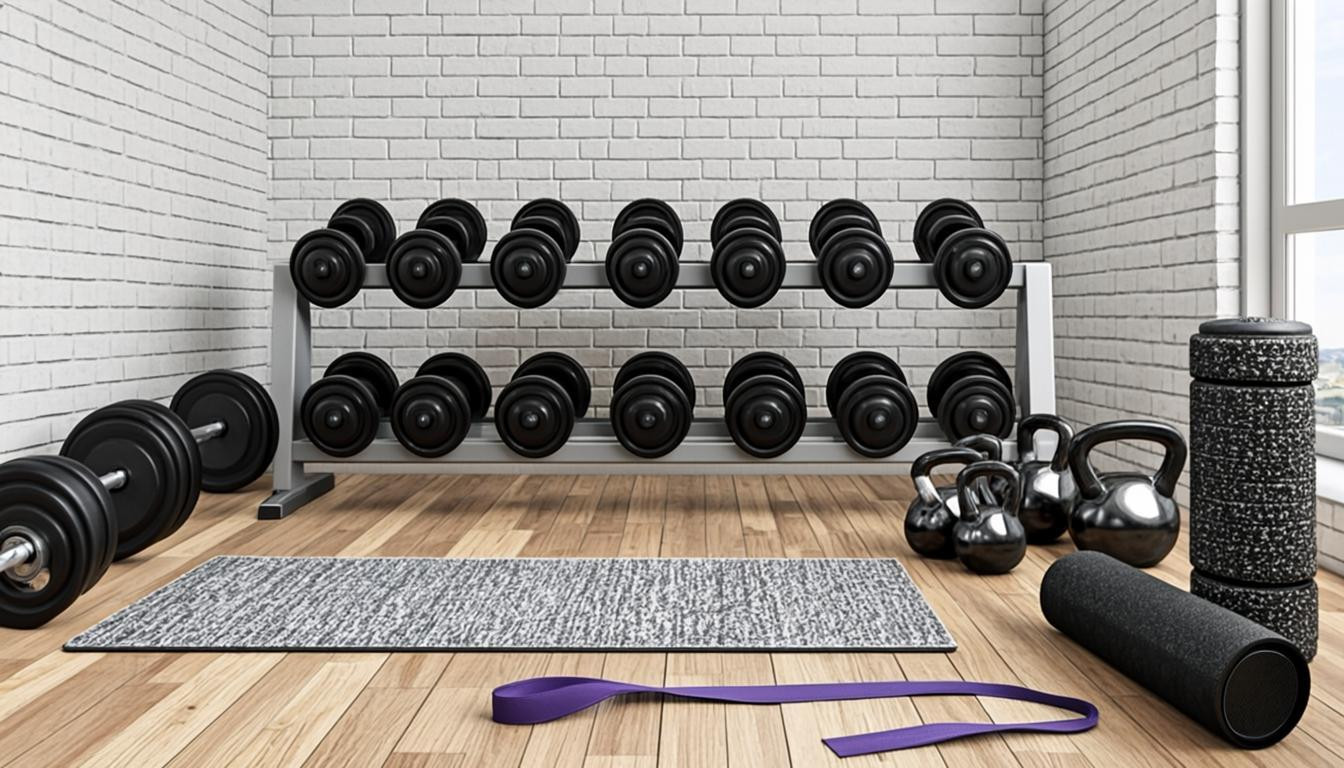
You don’t need a spare room or a $5,000 budget to build a home gym that actually works. With smart selection, a 10-by-10-foot corner of a bedroom, garage, or living room can hold everything you need for strength, mobility, and cardio training. Here’s how to assemble a complete setup without wasting space or money.
Start With the Floor
A quality floor protects both your equipment and your actual floor. Interlocking rubber tiles are the gold standard — they absorb dropped weights, provide grip for lifts, and define the gym zone visually. Aim for at least 8mm thickness; 15mm if you plan to deadlift. Avoid foam mats, which compress under weight and degrade quickly. A small investment here prevents expensive damage later.
The Power of Adjustable Dumbbells
Adjustable dumbbells are the single best investment for a small home gym. A single pair replaces an entire rack of fixed dumbbells, changing weight in seconds. Modern designs go from 5 to 50 pounds or more, covering the vast majority of exercises most people will ever need. The space savings are enormous — what would require an entire wall of traditional dumbbells fits in the footprint of a small bookshelf.
A Kettlebell or Two for Variety
Kettlebells offer something dumbbells can’t — ballistic movements like swings, cleans, and snatches that build power and conditioning simultaneously. For a home gym, two weights are usually enough: a moderate bell for swings and a heavier one for slow grinds like goblet squats. Cast iron is more durable than competition-style steel for home use. A 16kg and a 24kg bell covers most people for years.
Resistance Bands: The Multiplier
A set of resistance bands effectively doubles the exercises available in your home gym. Loop bands add accommodating resistance to barbell and dumbbell lifts. Tube bands with handles allow standing presses, rows, and pull-downs without a cable machine. Mini bands are perfect for glute activation and mobility work. They cost almost nothing, weigh almost nothing, and open up an enormous range of training options.
The Foam Roller and Mobility Tools
Recovery is part of training, and a foam roller is non-negotiable. A dense EVA roller handles most soft tissue work; add a lacrosse ball for targeted trigger point release. Resistance bands also double as stretching aids for mobility work. A yoga mat is essential for floor-based exercises and stretching. These tools take minimal space but dramatically improve how you feel during and after workouts.
Cardio Without a Treadmill
Cardio equipment eats space, but you don’t need it. A jump rope delivers brutal conditioning in the space of a hallway. Kettlebell swings and burpees build aerobic capacity without any equipment. For those who want low-impact options, a slide board or rowing machine can work in tighter spaces than a treadmill. The point is to choose what you’ll actually use rather than what looks impressive. Browse ShopBar’s Sports store for handpicked home gym equipment suited to small spaces.


Discussion
0 CommentsShare your thoughts — every perspective adds value.