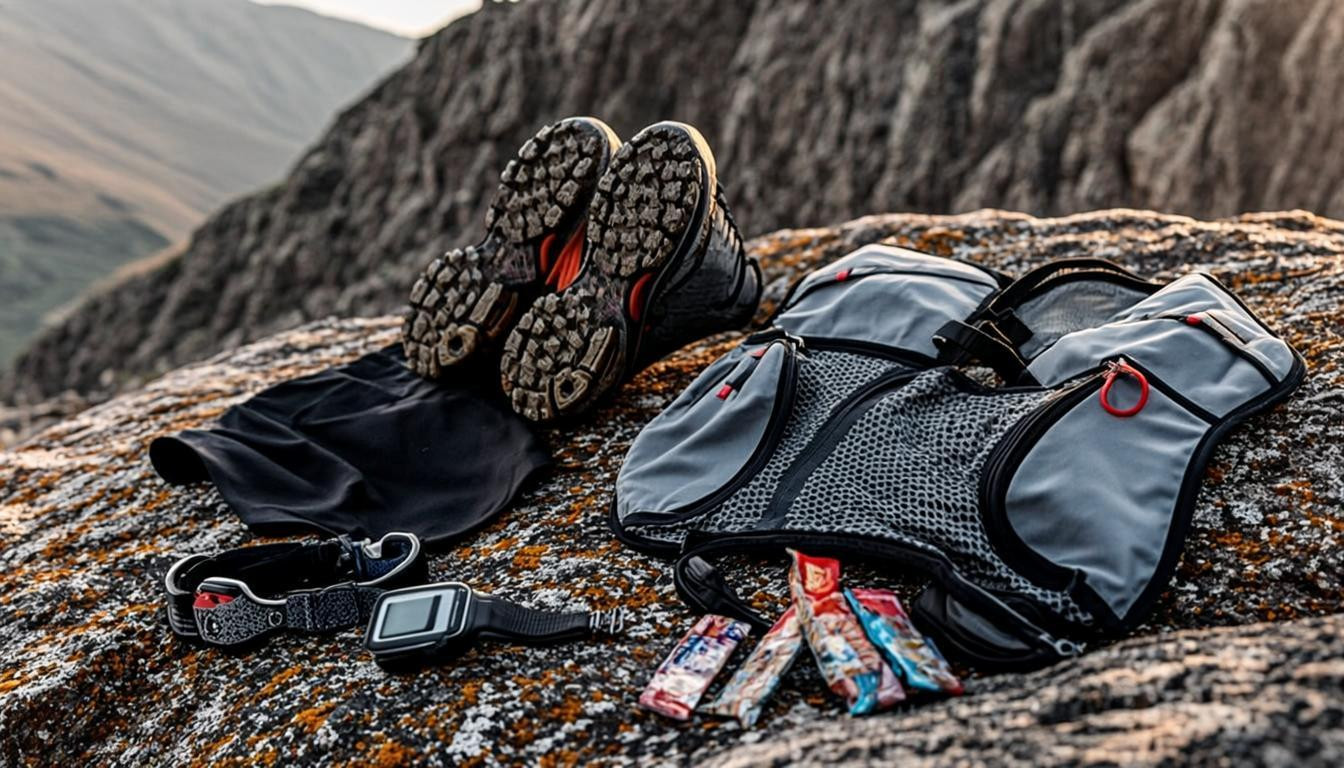
Trail running is one of the fastest-growing sports for good reason — it gets you off pavement, into nature, and delivers a workout that engages your whole body in ways road running can’t. But the gear requirements are different, and showing up to your first trail race unprepared can turn an exciting day into a miserable one. Here’s a complete checklist to get you to the start line ready.
Trail Running Shoes: Non-Negotiable
Road shoes don’t work on trails. Trail running shoes have aggressive lugs for grip on mud, rock, and loose dirt; protective plates to shield your feet from sharp rocks; and reinforced uppers to resist abrasion. Fit should be slightly roomier than road shoes — your feet will swell during long efforts, and toes that hit the front on steep descents will blacken. Try them on at the end of the day with running socks. Break them in with at least 30 miles before race day.
Hydration: Vest Over Belt
For anything over an hour, a hydration vest is the right call. Vests distribute weight evenly across your torso, don’t bounce, and hold soft flasks or a bladder depending on your preference. Look for one with pockets in the front for snacks and a phone, plus a secure rear pocket for layers. Capacity should match your race distance — 2 to 6 liters for most events, larger for ultras with mandatory gear lists.
Clothing That Handles Conditions
Trail races often start cold and end hot, with weather changes in between. A lightweight moisture-wicking short-sleeve is your base layer; add a long-sleeve option for cooler starts. Trail shorts should have a liner and at least one pocket for gels. Compression socks or calf sleeves protect against brush and reduce fatigue. A packable wind shell handles unexpected weather. Avoid cotton in any layer — it stays wet and chafes.
Nutrition and Electrolytes
For races over 90 minutes, you’ll need calories on the trail. Energy gels are convenient but get old fast; experiment with chews, blocks, and real food like salted potatoes during training. Aim for 30 to 60 grams of carbohydrate per hour, practiced well in advance. Electrolyte capsules or drink mix are essential in heat. Carry more than you think you need — aid stations can run out, and the back of a trail race is no place for a hunger bonk.
Navigation and Safety Gear
Even on well-marked courses, a GPS watch with breadcrumb navigation is invaluable. It tells you how far you’ve gone, how far is left, and whether you’re on course. For remote races, a small first-aid kit, a whistle, and an emergency blanket are mandatory in many events. A headlamp with fresh batteries is essential for early morning starts or races that might extend past sunset. Pack these in your vest’s rear pocket.
Training and Race-Day Mindset
Gear is only part of the equation. Train on terrain similar to your race — if the course is technical with lots of rocks and roots, find local trails that mimic those conditions. Practice downhill running, which destroys quads if you’re not accustomed to it. On race day, start slower than you think you should — trails are slower than roads, and early excitement leads to mid-race blowups. Most importantly, enjoy the experience. Trail racing rewards patience and presence as much as fitness. Browse ShopBar’s Sports store for trail running essentials from brands that test their gear on the same trails you’ll be running.


Discussion
0 CommentsShare your thoughts — every perspective adds value.