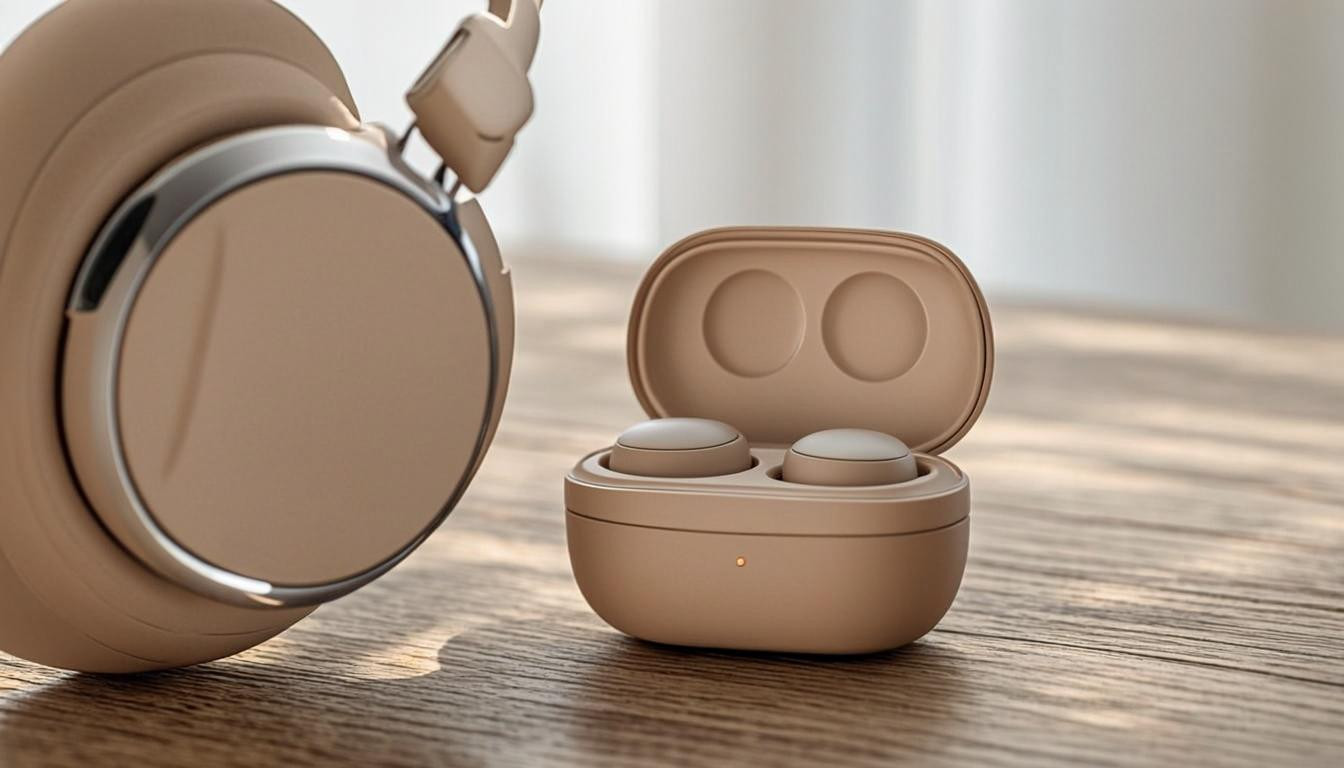
Wireless earbuds and over-ear headphones are no longer competing for the same buyer — most of us end up owning both, and using them for completely different things. But if you’re trying to decide where to spend your next audio dollar, it helps to understand what each format actually does well, and where the compromises hide.
The Case for Wireless Earbuds
Earbuds win on portability and convenience. A good pair slips into a pocket-sized case that doubles as a charger, pairs instantly when you open the lid, and lasts through a full workday with the case’s top-ups. For commutes, gym sessions, and quick calls, nothing else comes close. Modern models have also closed the gap on sound quality — premium earbuds now offer active noise cancellation, transparency modes, and even adaptive EQ that tunes itself to your ear shape.
Where Earbuds Fall Short
The biggest weakness of earbuds is physics. Small drivers can only move so much air, which means bass impact is naturally limited compared to larger headphones. Battery life on a single charge is also typically four to eight hours, which is fine for daily use but frustrating on a long-haul flight. And while noise cancellation has improved dramatically, the seal depends on ear tip fit — if your ears don’t match the included tips, you’ll lose both bass and isolation.
Why Over-Ear Headphones Still Matter
Over-ear headphones offer a fundamentally different experience. Larger drivers deliver deeper, more textured bass and a wider soundstage. The physical seal around your ears blocks noise passively, which means even models without ANC do better than earbuds in loud environments. Battery life routinely hits 30 to 40 hours, and the headband design is genuinely comfortable for hours at a stretch — something earbuds can’t claim.
The Trade-Offs of Over-Ear Designs
The downside is bulk. Even folding models take up significant bag space, and wearing them during a workout is a non-starter for most people. They also draw more attention — there’s a reason earbuds became the default for office environments. Price per feature is often worse too; the same ANC performance that comes standard in $200 earbuds might cost $400 in an over-ear flagship.
How to Decide
If you mostly listen on the go — commutes, gym, walking — earbuds are the obvious first pick. If you work from home, take long flights, or simply want to disappear into music for hours at a time, over-ear headphones are worth the investment. Many people end up with a solid pair of earbuds for daytime use and a comfortable over-ear for evenings at the desk.
Whichever direction you choose, focus on three things: sound signature that matches your taste, ANC that genuinely blocks low-frequency noise, and a fit you can live with for hours. Explore ShopBar’s audio collection for both formats, with detailed specs on every model.



Discussion
0 CommentsShare your thoughts — every perspective adds value.