

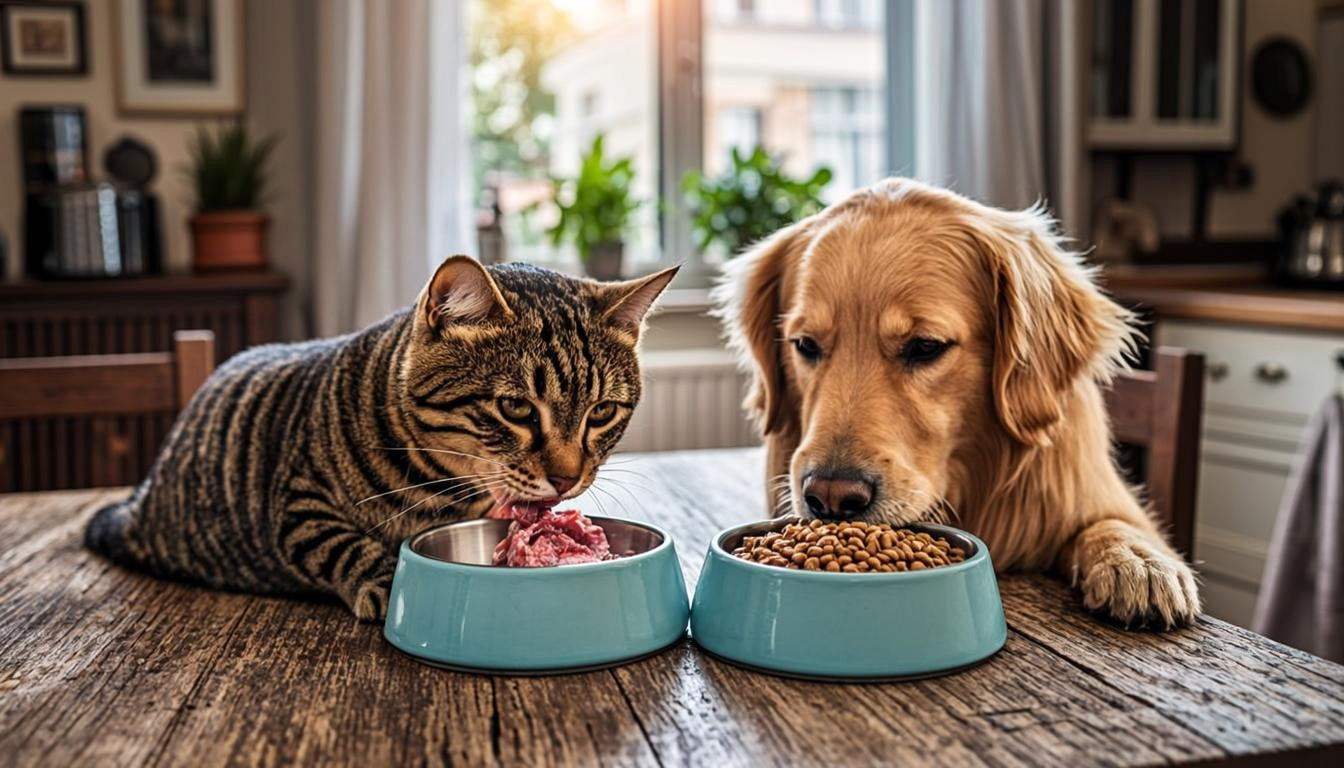
Ask any group of pet owners whether wet or dry food is better, and you’ll get confident answers on both sides. The truth is that both formats can deliver complete and balanced nutrition — the right choice depends on your pet’s age, health, water intake habits, and the realities of your daily routine. Let’s break down the real trade-offs so you can match the format to your pet, not the other way around.
Hydration: The Hidden Advantage of Wet Food
Cats in particular evolved as desert animals that get most of their water from prey. As a result, many domestic cats have a weak thirst drive and live in a state of mild chronic dehydration. Wet food is roughly 70-80% water, while dry kibble is around 6-10%. For cats prone to urinary crystals or kidney issues — both extremely common in senior cats — this hydration difference is clinically meaningful. Dogs are less affected because they drink readily, but small dogs and senior dogs with dental issues often benefit from the moisture and softer texture of wet food. If your pet’s water bowl stays full all day, wet food is worth a serious look.
Dry Food: Convenience Without Compromise
Dry kibble has real advantages that wet food can’t match. It’s significantly cheaper per calorie, easier to portion, and can sit in a bowl all day without spoiling — making it ideal for grazing cats and busy households. The crunching action also provides mild abrasive cleaning for teeth, although it’s no substitute for actual dental care. Kibble is also far easier to use in puzzle toys and training treats, which matters more than most owners realize for enrichment. If your pet is at a healthy weight, drinks water normally, and has no medical issues, a high-quality dry food is a perfectly defensible choice.
The Best of Both: Mixed Feeding
Many veterinary nutritionists now recommend a mixed feeding approach — a base of dry kibble for convenience and cost, with a portion of wet food once or twice a day for hydration, palatability, and variety. This is especially valuable for cats, who tend to be picky eaters and can develop food aversions if fed only one texture their whole lives. A common pattern is dry food in the morning and wet food in the evening, or dry food as the base with a wet-food topper. The key is to calculate total daily calories and reduce the dry portion accordingly so you’re not overfeeding. Mixed feeding gives you the strengths of both formats and creates a more interesting mealtime experience for your pet.
Special Considerations by Life Stage
Puppies and kittens benefit from wet food’s higher moisture and easier chewing, especially during weaning. Senior pets often lose dental health and appetite, and wet food’s stronger aroma and softer texture can extend quality of life in the final years. Pets with kidney disease, urinary tract issues, or diabetes frequently do better on wet food — your vet will usually recommend it. Conversely, pets prone to obesity may do better on portion-controlled kibble because wet food is easier to overfeed. There’s no universal right answer; there’s only the right answer for your pet at this moment.
How to Decide
Start with three questions: Does my pet drink water willingly? Does my pet have any health conditions? What can I realistically maintain for years? If your pet drinks normally, is healthy, and your routine favors convenience, a quality dry food is fine. If hydration is a concern, your pet is a senior, or you can commit to a twice-daily feeding routine, lean toward wet or mixed feeding. At Pawwell, we stock premium options in both formats plus complete toppers — so you can build a feeding routine that fits your pet’s biology and your real life, not just the marketing on the shelf.



Discussion 0 comments
Share your thoughts — every perspective adds value.