

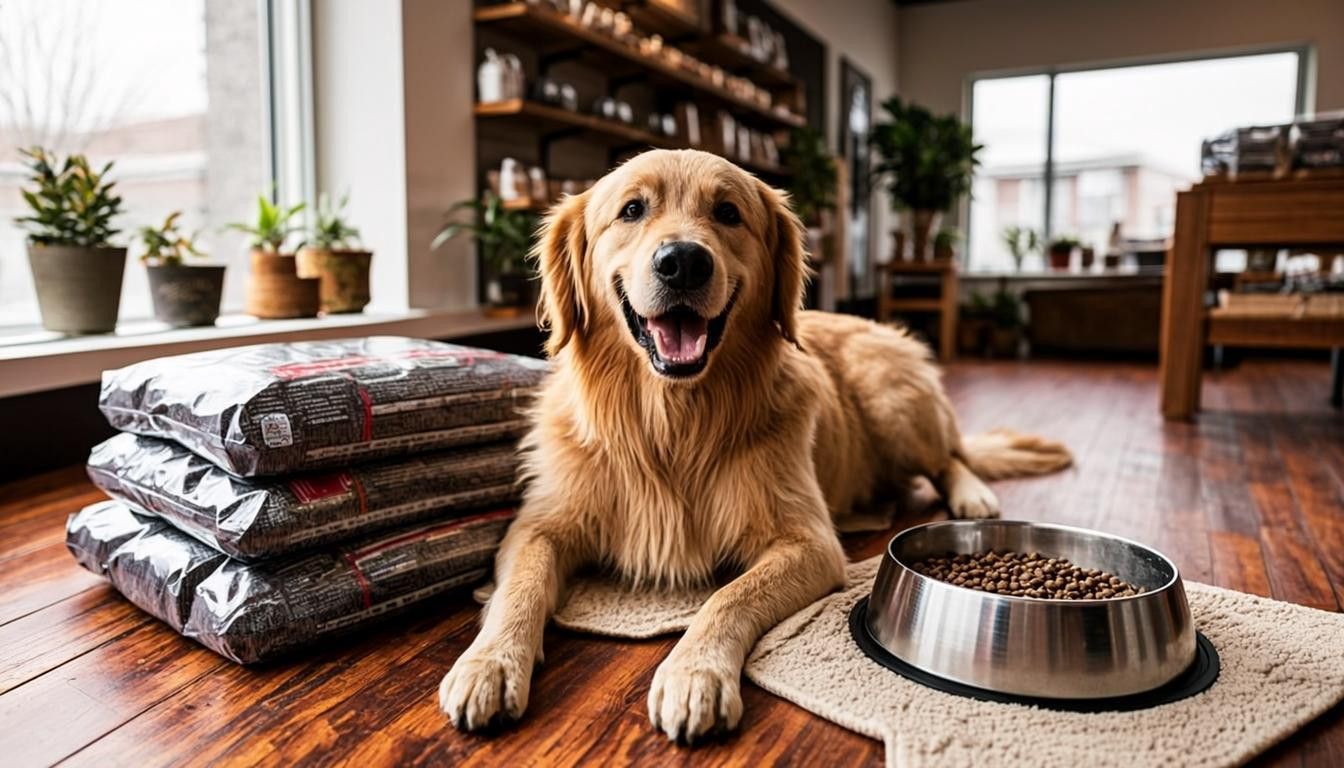
Walk into any pet store and you’ll see bags covered in mouthwatering buzzwords: “grain-free,” “ancestral,” “human-grade,” “natural.” None of these terms actually tell you whether the food inside is good for your pet. The truth lives on the back of the bag, in the ingredient panel and guaranteed analysis — and once you know how to read it, you can sort a quality formula from a marketing exercise in about thirty seconds. This guide breaks down the four parts of a pet food label that actually matter, with examples that translate vet-speak into plain English.
1. The First Five Ingredients Are the Whole Story
Ingredients are listed by weight before processing, which means the first five entries typically make up 80% or more of the formula. Look for a named animal protein at position one or two — “chicken,” “salmon,” or “lamb” — rather than vague terms like “meat meal” or “animal by-product.” A label that opens with “chicken, chicken meal, brown rice, oats, chicken fat” is telling you a story about real food. A label that opens with “corn, wheat, soybean meal, animal fat, corn gluten” is telling you a different story entirely. The first five ingredients are the single fastest sanity check you have.
2. “Meal” Isn’t a Bad Word — It’s Concentrated Protein
Many owners see “chicken meal” and assume it’s a filler. The opposite is true. Chicken meal is chicken meat that has been cooked down to remove water, which concentrates the protein. Because fresh chicken is roughly 70% water, it drops down the ingredient list after cooking — so a label that lists “chicken” first may actually contain less animal protein than one that lists “chicken meal” first. What you want to avoid are generic meals like “meat meal” or “bone meal,” which don’t identify the species. Named meals (chicken meal, salmon meal, lamb meal) are a sign of a transparent manufacturer.
3. The Guaranteed Analysis: A Rough Snapshot, Not a Recipe
The guaranteed analysis lists minimum crude protein, minimum crude fat, maximum crude fiber, and maximum moisture. These numbers are useful but misleading if you compare a dry kibble (10% moisture) directly to a wet food (78% moisture) without converting to dry matter. A quick math trick: subtract moisture from 100, then divide protein by that number to get dry-matter protein. A kibble with 26% protein and 10% moisture is 28.8% protein on a dry-matter basis. A canned food with 8% protein and 78% moisture is 36% on a dry-matter basis. Without this conversion, wet food always looks weaker than it really is.
4. The AAFCO Statement: The One Sentence That Matters Most
Somewhere on the bag, often in small print, you’ll find a sentence like “[Brand] is formulated to meet the nutritional levels established by the AAFCO Dog Food Nutrient Profiles for all life stages” or “Animal feeding tests using AAFCO procedures substantiate that [Brand] provides complete and balanced nutrition for adult maintenance.” The second version is stronger — it means the food was actually fed to dogs and the results measured, not just formulated on paper. “All life stages” sounds appealing but means the food must meet the higher requirements of growing puppies, which can be excessive for a senior dog. “Adult maintenance” is the right call for most adult pets.
Putting It Into Practice
The next time you’re shopping, do a quick four-step scan: read the first five ingredients, check for named protein meals, convert the guaranteed analysis to dry matter if you’re comparing formats, and verify the AAFCO statement matches your pet’s life stage. It takes about thirty seconds and filters out most of the marketing noise. At Pawwell, every formula we stock has already passed this scan — our team only carries foods with named proteins, transparent meal sources, and AAFCO-verified statements — so if you’d rather skip the homework, you can shop our nutrition aisle with confidence.



Discussion 0 comments
Share your thoughts — every perspective adds value.