
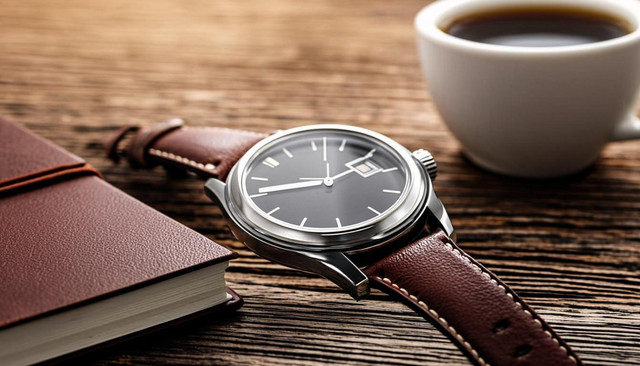
If you are shopping for your first proper watch, or upgrading from a smartwatch to something more permanent, you will quickly run into the great debate of horology: mechanical or quartz. The discussion gets heated online, but the practical answer is much simpler than forum threads make it sound. Both have real advantages, and the right choice depends entirely on what you want from a watch, not on which technology is objectively better.
Here is a practical breakdown of how mechanical and quartz watches actually differ in everyday use, what each is best at, and how to decide which one deserves a place on your wrist.
Quartz: Accurate, Affordable, and Low Maintenance
Quartz watches are powered by a battery sending electrical current through a quartz crystal, which vibrates at a precise frequency and drives the seconds hand. The result is a watch that is accurate to within a few seconds a month, costs relatively little to manufacture, and requires almost no attention from the owner beyond a battery change every couple of years.
For most people, quartz is the rational choice. A good quartz watch from a reputable brand will outperform a mechanical watch at ten times the price on every objective measure: accuracy, reliability, cost of ownership. If you want a watch you can pick up after not wearing it for three weeks and have it show the correct time, quartz is the answer. The downside is that quartz movements are less romantic, lack the craftsmanship narrative that mechanical watchmakers trade on, and typically have less resale value.
Mechanical: Craftsmanship You Can Feel
Mechanical watches are powered by a mainspring wound either by hand or by the motion of your wrist (in the case of automatics). Inside is a tiny, intricate mechanism of gears, jewels, and springs that has been refined for centuries. Mechanical watches tick several times per second, giving the seconds hand a smooth sweep rather than the one-tick-per-second of quartz.
The appeal of mechanical watches is not objective performance. It is the romance of wearing a centuries-old technology on your wrist, the appreciation of human craftsmanship, and the way a mechanical watch becomes something you maintain and pass down rather than dispose of. The trade-offs are real: mechanicals are less accurate, more expensive to service, sensitive to magnetism and shock, and will stop if not worn or wound regularly.
How to Choose for Everyday Wear
If you want one watch to wear every day, with minimal thought and maximum reliability, buy quartz. A high-quality quartz watch from brands like Grand Seiko, Cartier, or Omega will give you years of trouble-free service and look fantastic. If you want a watch that tells a story, that you will maintain and cherish, and that connects you to a tradition of mechanical craftsmanship, buy mechanical.
Many serious watch enthusiasts end up owning both. A grab-and-go quartz for busy mornings and travel, and a mechanical for evenings, weekends, and moments when you want to appreciate the watch on your wrist. There is no wrong answer here, only the answer that fits your life. Try on watches in both categories before you buy, because how a watch feels on your wrist matters more than any specification.


Discussion
0 CommentsShare your thoughts — every perspective adds value.