

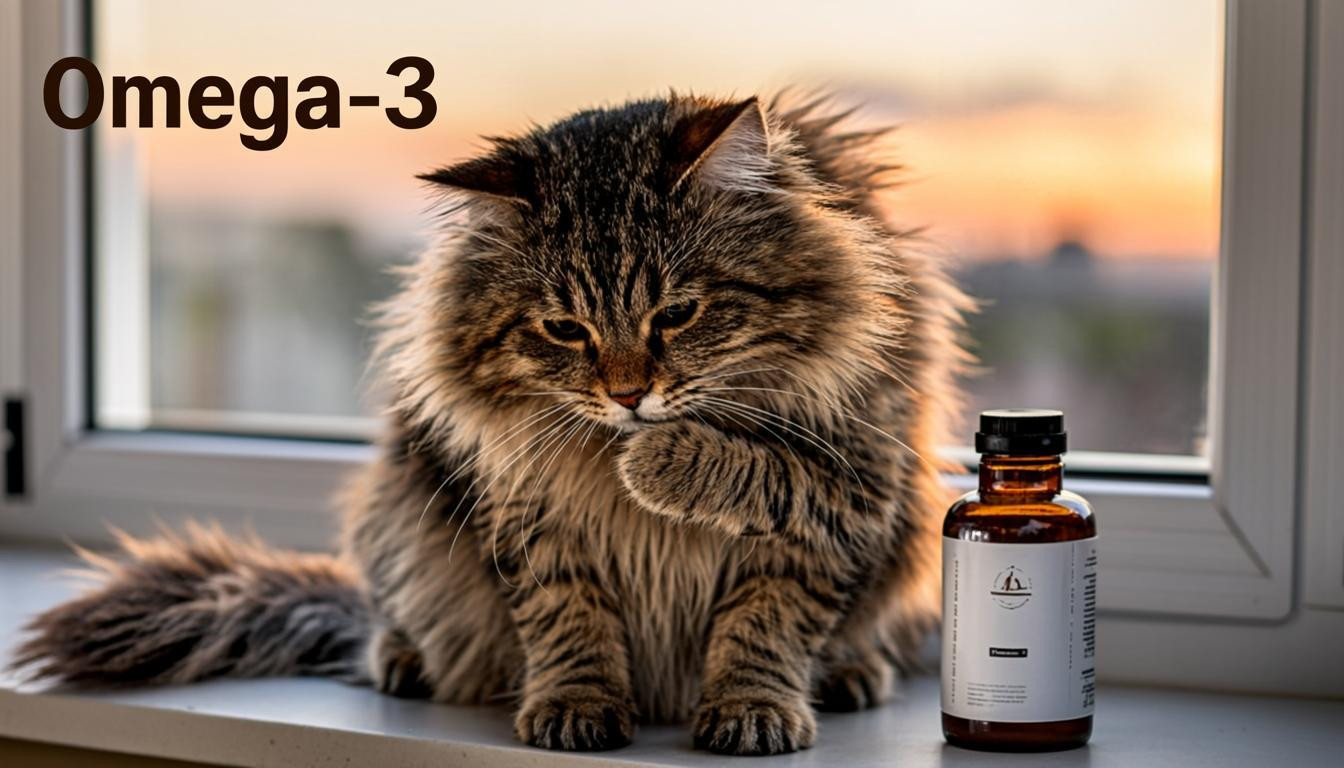
If your cat’s coat has lost its shine, you might assume the problem is the food — but the most common culprit is a specific nutrient gap that even premium cat foods can leave unfilled. Omega-3 fatty acids, particularly EPA and DHA from marine sources, are essential for skin barrier function, coat luster, and inflammatory control. Cats can’t efficiently convert plant-based omega-3s (like flaxseed) into the active forms their bodies use, which makes fish-derived omega-3s uniquely important. Here’s how omega-3s transform feline coat health, how much your cat actually needs, and what to look for when choosing a supplement.
Why Cats Are Different
Dogs and humans can convert a small percentage of plant-based ALA omega-3s into EPA and DHA. Cats, due to a genetic quirk in their desert-evolved metabolism, have very low levels of the enzyme needed for this conversion. This means flaxseed oil, chia, and other plant omega-3 sources are essentially useless for cats. They need preformed EPA and DHA, which only come from marine sources: fish oil, krill oil, or green-lipped mussel. This is why a cat food label that boasts “rich in omega-3s from flaxseed” is technically true but practically meaningless for your cat’s actual nutritional needs.
The Visible Benefits of Supplementation
Within four to six weeks of consistent omega-3 supplementation, most cats show visible coat improvement: a deeper sheen, less dander, and reduced shedding. The mechanism is straightforward — EPA and DHA strengthen the lipid barrier of the skin, which traps moisture and reduces flaking. The same anti-inflammatory effect helps cats with mild allergies, reducing the itchy over-grooming that creates bald patches on the belly and inner thighs. Long-term, omega-3s also support kidney health, heart function, and cognitive aging, making them one of the few supplements with benefits well beyond coat cosmetics. For senior cats in particular, daily omega-3 is one of the highest-leverage additions you can make.
Choosing a Quality Fish Oil
Not all fish oils are equal, and cats are particularly sensitive to the differences. Look for oil sourced from small cold-water fish like sardines, anchovies, or mackerel — these are lower on the food chain and accumulate fewer heavy metals. The label should specify molecular distillation, which removes contaminants. Avoid oils in clear bottles, as light exposure oxidizes the oil and creates a fishy smell that cats often reject. A high-quality fish oil stored properly has very little odor. Verify the actual EPA and DHA content on the label — many products list total fish oil but don’t break out the active omega-3s, which is the only number that matters.
How to Dose and Introduce It
A general target for cats is 50-100 mg of combined EPA+DHA per pound of body weight daily, though cats with inflammatory conditions may benefit from the higher end. Start at the lower dose for the first week to allow your cat’s digestive system to adjust — sudden fish oil can cause loose stools in some cats. Most cats accept fish oil well when drizzled over wet food, but picky eaters may prefer krill oil, which has a milder flavor and better absorption thanks to its phospholipid structure. If you’re using a pump bottle, store it in the refrigerator after opening and use it within three months.
The Bottom Line
If you do one supplement for your cat, make it omega-3. The coat benefits are visible within weeks, and the long-term protective effects on kidneys, heart, and joints make it one of the best dollar-for-dollar investments in feline health. The key is choosing a quality marine source, dosing consistently, and giving it enough time to work. At Pawwell, our cat wellness range includes a third-party-tested small-fish oil and a krill option for sensitive cats — and our team can help you choose the right format and dose for your cat’s age, weight, and current coat condition.



Discussion 0 comments
Share your thoughts — every perspective adds value.